Discover Treatments.tv

Watch the Treatments.tv introduction on YouTube

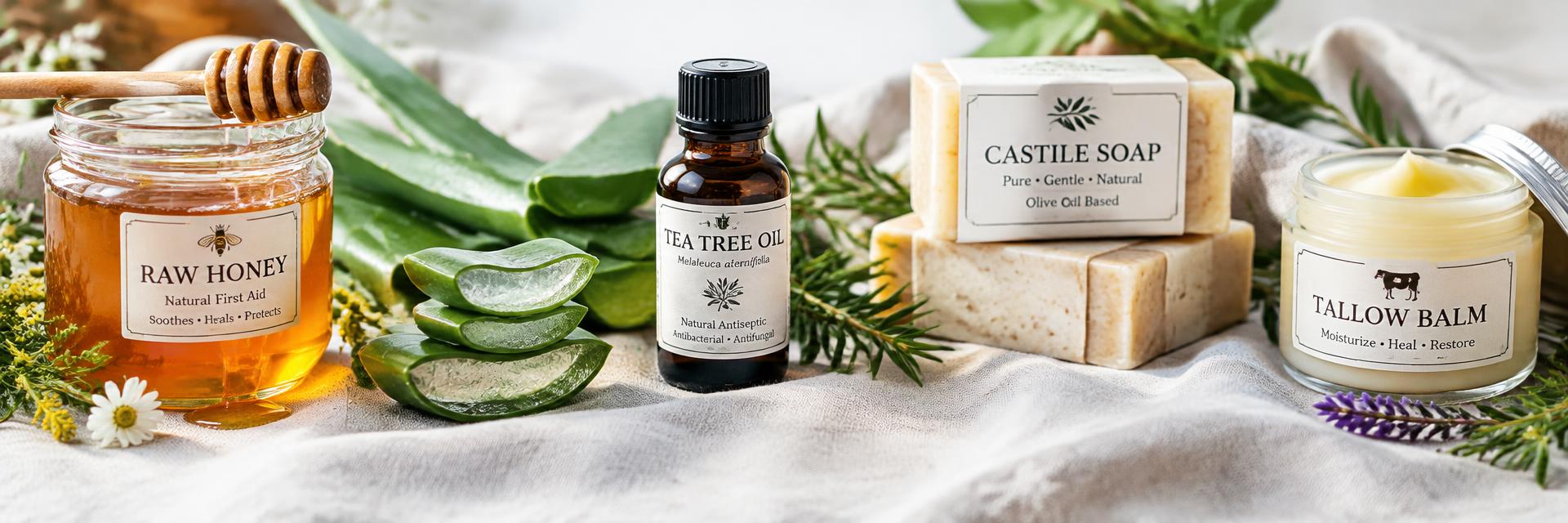
Earth & Botanical Remedies — illustrative category artwork
01

Earth & Botanical Remedies

Plants, preparations and the questions behind the label

A kitchen windowsill, a family recipe and a pharmacy shelf can all contain plant ingredients, but they tell different stories. Treatments.tv makes room for curiosity about botanical traditions without treating every preparation as a proven medicine. Begin with the actual thing you want to understand: a tea, a capsule, an oil, a topical product or a practitioner’s recommendation. Naming the preparation gives you a useful starting point. A broad promise about herbs is much harder to investigate than a clearly identified ingredient and a specific question.

Write down the product name, the full ingredient list and what you hope it will do. If someone recommends a mixture, ask whether you can see its label before buying it. Keep the distinction between enjoying a flavour or a ritual and using a product to address a health condition. Both deserve clear descriptions. Neither a photograph of a leaf nor the word traditional establishes that the product in front of you has been studied for your intended use.

Read the preparation as carefully as the plant name

A useful comparison includes the botanical name where it is provided, the plant part, the preparation method and the amount on the label. Do not assume two products are interchangeable because their packaging names the same plant. NIH’s Office of Dietary Supplements explains that botanical safety depends on factors including composition, preparation and quantity. That is a reason to take the actual label to a pharmacist or another appropriately qualified professional rather than asking about a vague category such as natural supplements.

Make a single list of the medicines, supplements and other products you use so that the conversation does not happen in fragments. Ask what information the professional needs to assess interactions and suitability in your circumstances. If you are pregnant, preparing for a procedure, caring for a child or managing an ongoing condition, mention that context directly. This page cannot make an individual safety assessment, and an attractive plant preparation should not become a reason to postpone one.

Give tradition its context and research its limits

When reading an article, look for three separate statements: what people have traditionally used the preparation for, what researchers have investigated, and what remains uncertain. A history of use is a cultural fact when documented; it is not the same claim as a demonstrated clinical benefit. Ask whether a study examined the same preparation, the same purpose and a population relevant to the question. A laboratory observation can be interesting without establishing that a retail product will help someone at home.

Our botanical category is an editorial starting point, not a shop, prescription service or endorsement scheme. Follow the linked source, keep a note of its review date and bring unresolved questions to your own care team. If a seller cannot explain an ingredient or relies on a secret formula claim, you can choose to pause the purchase. You do not need to resolve every uncertainty in a single visit or agree to a package because someone has given you a consultation.

Build a useful botanical research note

A short note can keep research grounded: the exact product, the reason for considering it, the source you read, the questions you still have and who can answer them. Keep marketing language separate from your own observations. Instead of writing that a product boosts everything, record what the seller actually claims and what evidence they supplied. This helps you compare information later without turning repeated advertising into an established fact.

For broader complementary-care topics, use the existing treatment directory and its links to original evidence summaries. Our editorial standards explain how we distinguish description from claims. If you notice a broken source or an unclear statement, send the page and the specific correction to the site’s care email. Precise questions improve the resource for the next reader, too.


Functional Nutrition — illustrative category artwork
02

Functional Nutrition

Nutrition that fits an ordinary week

Food is a daily practical decision before it becomes a headline about the next ingredient. Think about the meals you can prepare, the shops you can reach, the time you have and the people sharing your table. A useful nutrition article should help you ask a better question about those circumstances. It should not suggest that a carefully photographed bowl represents the only acceptable way to eat or that an expensive branded product is the entrance fee to wellbeing.

Start with one concrete difficulty: planning lunches, understanding a label, finding meals that suit a household or preparing questions for a dietitian. Keep the problem small enough to describe. A plan that depends on unfamiliar ingredients, equipment you do not own and hours of spare time deserves a practical review before you spend money. Cultural preferences, access and enjoyment belong in that discussion alongside nutritional information.

Separate food guidance from a product pitch

The World Health Organization describes healthy diets in terms of adequacy, balance, moderation and diversity, with their precise composition varying by individual circumstances and cultural context. That broad framework is different from a promise that one food will repair a particular condition. When an article uses the word functional, ask what function it means, for whom and on what evidence. The label can be an invitation to investigate rather than a conclusion you have to accept.

Read the entire claim, not just the ingredient name in large type. Is the page discussing a food, an isolated nutrient, a supplement or a restrictive programme? Does it distinguish general information from advice for people with a diagnosed condition? Follow the reference rather than assuming that a scientific-looking footnote supports every sentence around it. A source may establish one limited point while a sales page stretches it much further.

Make advice workable before making it ambitious

For a conversation with a qualified nutrition professional, describe a normal day honestly. Include work patterns, cooking arrangements, preferences and anything that makes shopping or preparation difficult. Bring the questions you want answered rather than a list of rules gathered from unrelated videos. You can ask for alternatives, clarification and a plan that takes account of your resources. The point is to improve understanding, not to perform an ideal lifestyle for someone else.

A grocery note can be more useful than an elaborate challenge. List what a meal needs, what you already have and what you will realistically use. If you are comparing a paid programme, ask what support is included, what qualifications the adviser holds, how progress is reviewed and whether purchases are required. Keep the commercial terms visible. A recommendation and a subscription agreement should be understandable as separate decisions.

Research claims without losing the pleasure of food

Words such as clean, reset and superfood often say little about the actual question you need answered. Replace the slogan with a plain sentence: what change is being proposed, why, and what would count as a useful result? Avoid judging a person’s health from a meal photograph or assuming that a personal success story is a programme evaluation. An appealing recipe can be worth enjoying without turning it into a universal treatment claim.

Treatments.tv connects this everyday perspective with its wider directory of care topics and original health resources. The directory is not an individualized meal planner, and the site does not assess allergies or prescribe diets. For a condition-specific question, use the relevant healthcare professional rather than adapting a stranger’s routine. Keep your research note focused on the information you need for that conversation, and leave room for ordinary meals, hospitality and the realities of your week.

Physical & Mechanical Therapies — illustrative category artwork
03

Physical & Mechanical Therapies

Understand the appointment before booking it

Hands-on care covers different practices, settings and professional roles. A massage appointment, an acupuncture session and a chiropractic assessment should not be collapsed into a single promise about fixing the body. Begin with the service name and what the practitioner actually proposes to do. Ask how the first appointment works, what information they need, what consent involves and what choices you have during the session. Clear explanations are useful whether you are curious, returning to care or comparing options.

Our current directory includes chiropractic adjustment, acupuncture and other care topics, each with a source link and a note about limits. Use those short entries to orient yourself, then read beyond the summary. The directory does not rank local businesses or certify a practitioner. Professional registration, permitted activities and complaints processes should be checked with the appropriate regulator for the place where care is delivered.

Match the question to the actual evidence

NCCIH’s massage overview describes research that varies by condition and cautions that some findings are limited. It also discusses safety considerations. That is more useful than a blanket statement that massage works for everything or can never help anyone. When comparing an article with a service description, look for the particular outcome being discussed and the type of care studied. A finding about one approach cannot automatically support every technique sold under a similar name.

Bring your own circumstances into the professional assessment rather than trying to infer suitability from a general article. Describe the reason for the visit, relevant history and the questions that concern you. Ask what the practitioner would need to know before proceeding and what should prompt referral elsewhere. You do not have to diagnose yourself in order to explain what is happening or request a clear account of the proposed appointment.

Consent includes being able to ask for a change

Before a session, ask about clothing, draping, positioning, touch, the presence of another person and how to stop or adjust what is happening. If accessibility, language, sensory preferences or previous experiences affect your comfort, raise those needs when arranging the visit. Ask whether the setting can accommodate them. A conversation in advance can reveal practical constraints that a polished booking page does not show.

Write down the price, expected length, cancellation terms and what follow-up is included. If a course of appointments is suggested, ask how it will be reviewed and what information will guide the next decision. Keep any insurance questions separate from assumptions about benefit or clinical suitability. Coverage and registration are administrative facts to verify; neither should be treated as a guarantee that a particular intervention is right for an individual.

Movement is broader than a treatment table

WHO’s physical-activity guidance includes everyday movement such as walking, cycling and wheeling, not only organized exercise. That wider perspective can help frame a conversation about routines, access and participation. It does not mean that a general activity recommendation answers a question about an injury or an unexplained symptom. Where a personal assessment is needed, use a suitably qualified professional to discuss the appropriate next step.

Consider what you want to understand after an appointment: the explanation you were given, any agreed plan, the review point and who to contact with questions. Keep a brief record in your own words. If instructions are unclear, ask before improvising. Treatments.tv’s role is to make that research and conversation easier, with source-linked starting points rather than promises of a universally correct technique, a preferred practitioner or a result we cannot verify.

Elemental Therapies — illustrative category artwork
04

Elemental Therapies

The outdoors is a setting, not a universal prescription

A shoreline, a garden and a quiet park can each provide a setting for a personal routine. The photograph in this banner is an invitation to explore those experiences, not evidence that a particular landscape treats a condition. Begin with what you want from the activity: time outside, company, a change of scene or a conversation about an organized practice. Those are clearer starting points than a sweeping claim that an element of nature will solve every problem.

The same distinction applies to temperature, light and breathing practices. A casual description can hide very different activities, levels of intensity and requirements for supervision. Ask what the session actually involves before deciding whether to participate. General interest in the outdoors does not establish personal suitability for an intensive heat, cold or breath-based programme. For health questions, seek an assessment that considers the individual activity and your circumstances.

Ask what is happening, where and with whom

For an organized session, request a plain explanation of the setting, duration, supervision and arrangements if someone wants to stop. Ask what information participants receive beforehand and which questions should be discussed with a healthcare professional. Look beyond the dramatic photograph. Practical information about access, changing facilities, transport and weather can be more relevant to a first visit than a long list of broad wellbeing claims.

If the event is outdoors, understand the route, meeting point, communication arrangements and what happens if conditions change. If a provider uses equipment or controlled temperatures, ask how their session is managed and what responsibilities belong to participants. These are planning questions, not instructions to attempt the activity yourself. A website should make the boundaries of an experience clear instead of relying on the reader to guess from a video.

Avoid the detox shortcut

NCCIH’s review of detoxes and cleanses explains that research does not establish the broad claims often made for these programmes and describes potential risks. Treat that as a reason to examine a particular claim carefully, not as permission to replace one sweeping slogan with another. Ask what substance is supposedly being removed, how that would be measured and what evidence connects the proposed activity to the promised result.

Be especially careful about pages that move from a pleasant experience to claims about treating disease without explaining the evidence. A person may enjoy a routine while its proposed medical mechanism remains unproven. Keep those two statements separate. A testimonial about feeling refreshed cannot answer every question about safety, long-term outcomes or suitability for someone else. There is no need to accept a dramatic explanation in order to appreciate a place or an experience.

Explore the actual projects behind our community

For a concrete local story, read our Med Bee Tate greenhouse introduction. It describes a proposed Langley space and future kit enquiries; the page is a project introduction, not proof of an operating clinical service. Check the article’s current wording for its status rather than assuming a concept image means appointments are available. Questions about the proposal can be directed through the contact details on the site.

The Living Well Festival article offers another existing route into the Treatments.tv community. Read the event and listing details there before making plans. A festival connection or a place in a directory should not be mistaken for a clinical endorsement. Our aim is to help people discover practices and the people behind them while keeping the practical facts, commercial relationships and limits of health information visible. Curiosity works better when readers can tell what exists today and what is still a proposal.

Mind, Biology & Nervous System — illustrative category artwork
05

Mind, Biology & Nervous System

Make space for attention without promising a reset

Rest, concentration and feeling less rushed are subjects people can discuss without turning them into a cure-all. Treatments.tv approaches meditation and related routines as topics to understand, with room for individual preferences and limits. Start by describing the practice: a guided recording, a class, a personal routine or a structured programme. Those details matter more than an impressive label about rewiring the brain or resetting the nervous system.

Consider what makes a setting workable for you. Some people want a quiet room; others want clear instructions, a shorter session or the option to keep their eyes open. Ask a facilitator what participation involves and what choices are available. You do not have to agree to an uncomfortable format simply because it is presented as a standard wellness experience. Accessibility and consent belong in these conversations just as they do in other service settings.

Keep mindfulness and clinical care distinguishable

NCCIH’s meditation and mindfulness overview discusses possible benefits for some outcomes while describing differences in study quality and limitations in the evidence. It also notes that unpleasant experiences can occur and that safety has not been studied equally well across all practices. Its guidance does not support using mindfulness as a reason to replace or postpone conventional care. Follow the original overview for the context behind those points rather than relying on a single promotional sentence.

Our directory also includes cognitive behavioral therapy with a link to NHS information. A clinical talking therapy and a general meditation class have different purposes and expectations. Ask about the provider’s role, qualifications, scope and what happens when a participant needs support outside that scope. A warm manner, a popular account or a certificate shown without context is not enough information to establish that someone can deliver a particular healthcare service.

Choose a routine you can describe and review

If you are exploring a nonclinical attention practice, think about the format you would actually use: a brief guided session, a class with a clear beginning and end, or a personal period away from interruptions. Record what the experience involves and how you respond rather than adopting a stranger’s explanation of what must be happening in your body. Personal observations can help you ask questions; they do not establish a medical diagnosis or prove a programme’s claims.

When comparing paid services, read the terms as carefully as the programme description. Ask whether recordings, individual contact or group sessions are included, how cancellations work and whether there is pressure to keep buying additional levels. Understand the boundaries around messages and personal disclosures. A class or community may have its own privacy arrangements, and you should be able to learn about those before sharing information you would prefer to keep private.

A community connection with clear boundaries

Our Med Bee Tate article introduces a proposed greenhouse setting for pausing and connecting. It is an invitation to understand a project, not a claim that the space provides a proven treatment. The festival article similarly describes a community and business-listing opportunity. Keep the value of meeting people separate from assumptions about clinical effectiveness. A useful community can welcome careful questions without treating them as disloyalty to a particular practice.

For an ongoing concern about sleep, distress or mental health, bring the question to an appropriately qualified healthcare professional rather than trying to solve it through website browsing alone. Treatments.tv does not provide diagnosis, crisis monitoring or an individual treatment plan. The site can help you learn the vocabulary, follow an original source and organize questions. That is a practical role: making the next conversation clearer while leaving individual assessment with the people qualified to provide it.

The Synthetic Swap — illustrative category artwork
06

The Synthetic Swap

Compare the actual product, not the promise on the front

The Synthetic Swap is a place to ask better questions about ingredients and everyday alternatives. The title does not mean that synthetic ingredients are automatically harmful or that natural ones are automatically safe. Those shortcuts make comparison harder. Begin with the item’s purpose, its full label, the way it is intended to be used and the specific reason you are considering a change. A clear question is more useful than an undefined ambition to remove every chemical from daily life.

Separate personal preferences from health claims. You may prefer a fragrance, a texture, a packaging choice or a familiar preparation without needing to claim that the alternative is universally dangerous. If the reason for switching involves a symptom, an allergy concern or a medical condition, ask an appropriate healthcare professional about that question. A general guide cannot determine which ingredient caused a problem or choose a suitable replacement for an individual.

Keep food, cosmetics, supplements and medicines distinct

Similar-looking containers can belong to very different product categories. Read how an item is described, what claims are made and which directions accompany it. Do not assume that a familiar kitchen ingredient has the same role in every preparation, or that a product’s presence in a wellness shop establishes clinical benefit. Keep prescribed care separate from optional purchases. This category is not a guide to stopping medicines or replacing a treatment plan with a homemade alternative.

NCCIH’s guidance on dietary supplements recommends discussing their use with healthcare providers and explains that products can have side effects or interactions. It also distinguishes marketing availability from evidence of effectiveness. Use that source for supplement-specific questions and take the actual label to the professional conversation. A comparison is only useful when the items, intended use and relevant evidence are identified clearly enough for someone else to understand.

Build a comparison that leaves the sales pressure out

Put the products side by side on paper. Record their stated purpose, ingredients, quantity, price, instructions and the evidence offered for any specific health claim. Note what you do not know. If one option requires equipment, a subscription or repeated appointments, include those practical commitments. Avoid letting a low introductory price stand in for the full cost of participation. The point is to make the choice understandable before deciding whether it is worth making.

Ask the seller a direct question about any claim you cannot trace. A useful answer names a source and explains its relevance to the actual product. An answer based only on popularity, vague scientific language or a story about one person leaves the question unresolved. You can decline to buy while continuing to research. Taking time is a legitimate outcome of comparison, particularly when a seller presents urgency as the main reason to act.

Use the network as a path to information

Treatments.tv brings together topic introductions, original sources and a small set of existing editorial projects. Follow an internal link when it answers the next question, and follow an external source when you need its evidence or guidance. The directory is a starting point rather than a verified local-provider marketplace. We do not infer a business relationship, professional qualification or endorsement simply because a subject appears on this homepage.

If you are a practitioner or a small business interested in the community, read the current festival and listing information and use the published contact details to ask about relevance. Describe your service accurately and distinguish qualifications from promotional language. If you are a reader, ask the same clarity of us: a source you can follow, a claim you can understand and a clear distinction between an existing service and a proposed project. Useful discovery begins with those basics, and the next step should remain yours to choose.

Projects, people & community

Med Bee Tate proposed greenhouse with grass and wood flooring

Existing generated design concept. Proposed project, not a completed treatment facility.

Med Bee Tate: a greenhouse space to pause

Explore the Langley greenhouse and private-room proposal, its intended setting and future kit enquiries.

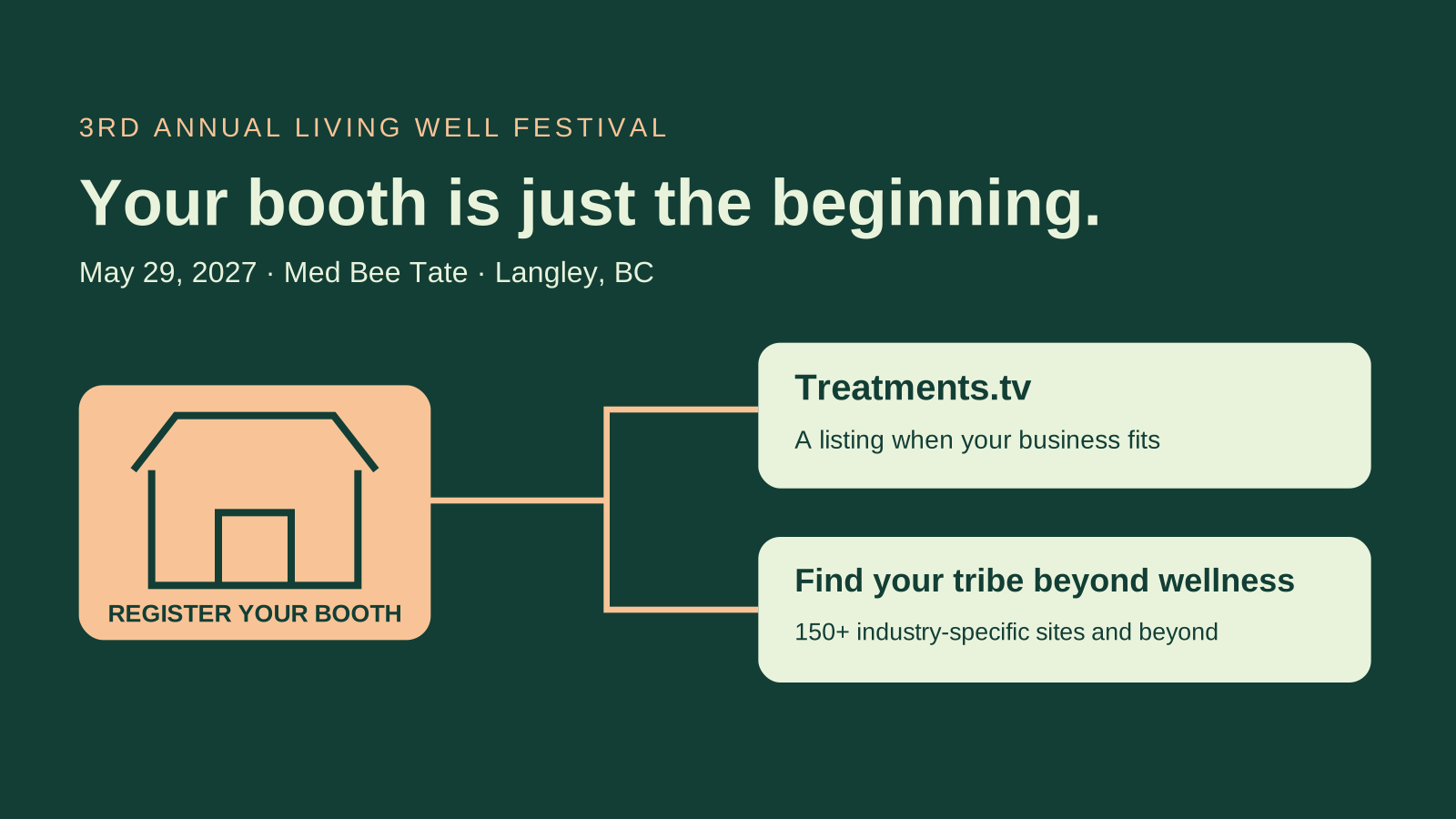
Living Well Festival booth and community-listing editorial graphic

Existing Treatments.tv festival information graphic, reframed at 1600 × 900. Not an event photograph.

Living Well Festival: your booth, your wider tribe

Read the May 29, 2027 festival article and how relevant booth businesses connect with Treatments.tv and the wider network.